
Hero MotoCorp is expecting its electric vehicle (EV) business to break even once it reaches monthly sales volumes of 25,000 to 30,000 units, which is a couple of years away, Chief Financial Officer (CFO) Vivek Anand said on Tuesday. "This year, in 2024-25 (FY25), if I really look at my EV performance, our volumes have grown by 200 per cent," Anand told analysts during the company's post-results conference call.

Tourists hesitant to visit America due to frequent policy changes there.
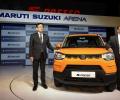
Car purchases in India are largely limited to the top 12 per cent of households with an annual income exceeding Rs 12 lakh, while even small cars have become unaffordable for the remaining 88 per cent, said R C Bhargava, chairman of Maruti Suzuki India Limited (MSIL), on Friday. "How can you get high car sales growth if 88 per cent of the country are below the levels of income where they cannot afford these cars costing Rs 10 lakhs and above?
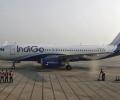
Airlines waive cancellation and rescheduling fees and boost flight capacity from Srinagar.
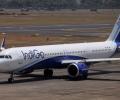
Executives from India's leading airlines are conducting internal meetings to devise alternative routes for their international flights that currently pass through Pakistani airspace.
'CORSIA has set impossible targets. It tries to limit countries to the emission levels of the number of aircraft that they had in 2020. That has to be opposed.'

Biryani is set to get its own valuation. Devyani International, the largest franchisee of Kentucky Fried Chicken (KFC) quick-service restaurants (QSRs) in India, is considering the acquisition of Sky Gate Hospitality, which operates restaurants under the brand Biryani By Kilo (BBK), it said in a statement to BSE on Monday.
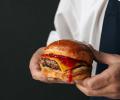
The restaurant chains are riding the Hallyu wave -- a phenomenon about the growing global prominence of South Korean pop culture.

From high-end villas with private sommeliers to exclusive showcases at cultural centres to private sessions with Michelin-starred chefs and celebrities, hotel chains are pulling out all the stops

While sedan sales have declined in the mass-market segment in recent years, demand remains strong for BMW sedans, which account for 45 per cent of its sales in India.

Sluggish urban demand, a high base effect, and weak sales of hatchbacks and sedans weigh down passenger vehicle sales in FY25.
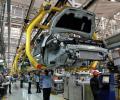
Auto parts exports from India may see a slight slowdown as US President Donald Trump's 25 per cent tariff could increase car prices for buyers by 8-25 per cent, thereby affecting demand, experts believe.

'Adventure travel, cultural tours, and wellness retreats are in high demand.'

Mother Dairy is targeting a revenue of Rs 20,000 crore by financial year 2026 (FY27) as it continues to identify white spaces and introduce new products, the company said. On Wednesday, it launched a new "pro" range of products enriched with protein, starting with milk enriched with 30 per cent more protein than regular milk.
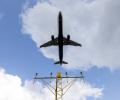
Aircraft supply to airlines will remain constrained during the next four to five years due to the supply chain issues being faced by plane makers Airbus and Boeing and there is not much that carriers can do beyond optimising their flight network expansion, Air India CEO and MD Campbell Wilson said on Tuesday.

As temperatures shoot up this month signalling an early onset of summer, sales of air conditioners (AC) are set to increase, with companies expected to hike the prices of ACs by 4-5 per cent due to component shortages. Leading players like Haier and Bluestar and suppliers like EPack Durables have raised their production capacities to meet the 25-30 per cent rise in demand expected in the coming months.
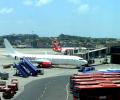
Reconstruction of the terminal is expected to be completed by September 2028.
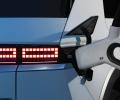
Top executives from Siam and major carmakers recently met with Heavy Industries Secretary Kamran Rizvi to discuss the matter. Officials from NITI Aayog were also present.

GMR Group-led DIAL, which manages and operates India's largest airport, recently requested the AERA to double the user development fee (UDF) for international business and first-class travellers compared to economy and premium economy over the next four years. It has also sought higher UDF for all domestic passengers flying during peak hours -- 5 am-8:55 am and 5 pm-8:55 pm.
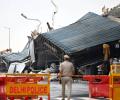
Delhi International Airport Limited (DIAL), which operates India's largest airport, dismissed the expert committee report as "inaccurate", claiming it relied on "probabilities, hypothesis, and conjectures" rather than empirical data or complete documentation.
 © 2026 Rediff.com - Advertise with us - Disclaimer - Privacy Policy - Sitemap - Feedback - About us - Terms of use - Grievances